
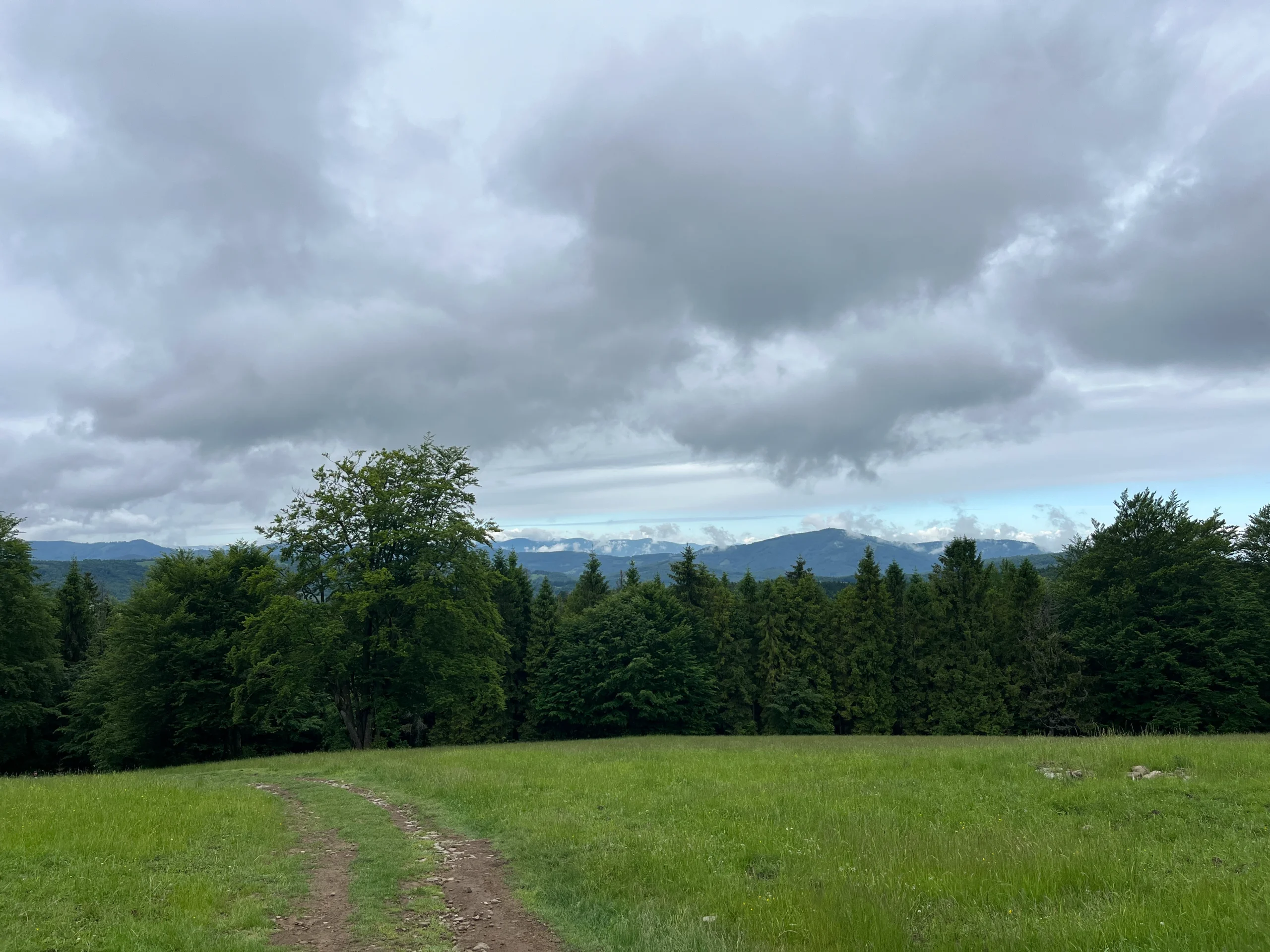
Brenna - a mountain village in the Silesian Beskids
When we think of the Silesian Beskids, the first places that come to mind are usually Wisła, Szczyrk or Ustroń. That is where most tourists visiting the mountain areas of the Silesian Voivodeship head. A few kilometres further on, however, lies Brenna – a far quieter village, yet just as well located for lovers of mountain hiking and relaxing in nature.
Table of contents:
Location
Brenna lies in the valley of the Brennica river, in the Silesian Beskids. It is a far less crowded village than Wisła or Szczyrk. There are a few hotels and cottages for rent here, and consequently souvenir shops and restaurants. Despite this, Brenna retains its quiet, local character, with houses scattered along the valley, forests starting right behind the buildings and trails that quickly lead up into the mountains, as well as the river flowing alongside where you can rest. It is a good place for anyone looking for a combination of mountains, walks and relaxation without much tourist bustle. A few minutes outside the centre are enough to find yourself on a forest road or on the way up one of the surrounding peaks. On top of that, it makes a good base for trips to other towns.
History
The first references to Brenna date back to the end of the 15th century. The village developed in a pattern typical of the Beskids, based on shepherding, forestry and small-scale farming. The Vlachs – pastoral communities migrating along the arc of the Carpathians – had a major influence on the region's development. It was they who brought sheep grazing and a characteristic way of organising life in mountain valleys to the Beskids. Over the following centuries Brenna belonged to the Cieszyn estates, and later to the Habsburgs. For a long time it was a fairly isolated village, which is why it has preserved its rural, peaceful character.
Getting there
Brenna is located in the southern part of the Silesian Voivodeship, in the Cieszyn district, between Ustroń, Wisła and Szczyrk. For people from outside the region, the easiest reference point is Bielsko-Biała, which is about 25 km from Brenna. From Katowice the journey usually takes about an hour and 15 minutes, depending on traffic.
Getting there by car
A car is by far the most convenient way to reach Brenna, especially if you are planning hikes on the surrounding trails. Provincial road no. 941, connecting Ustroń with Wisła, runs through the village, and you need to turn off it towards Brenna.
Getting there by public transport
Brenna can also be reached by public transport, although it is more difficult. The nearest railway stations are in Cieszyn and Skoczów. From there, buses and minibuses run to the centre of the village. You can find the detailed timetable at - https://wispol.pl/rozklad-jazdy/
Parking in Brenna
In Brenna there is no problem finding a parking space, especially outside the peak season. In the centre of the village and near popular trailheads there are several car parks that make it easier to start a mountain trip. Most of the spaces at trail entrances are free, but their number is usually limited. We write in detail about parking before the mountain trails in the individual articles about specific peaks. More in the chapter on the most interesting peaks.
If you are planning to explore the centre of Brenna or take a walk along the Brennica, the most convenient option is to park near the Tourism Park. It is a good starting point for those who first want to get to know the village and only later set off on the trail. In the centre, however, most car parks are paid.
What to see in Brenna
Although Brenna is associated above all with mountain trails, it is worth spending some time getting to know the village itself. Here you will find both places connected with local culture and tradition, and attractions for those looking for a peaceful rest surrounded by nature.
Tourism Park
The Tourism Park is the heart of Brenna and one of the most popular places in the centre of the village. It is here that many events organised by the municipality take place, and residents and tourists alike enjoy spending their free time.
Within the park you will find:
walking paths,
a children's playground,
a sports pitch,
recreational areas,
an amphitheatre that hosts numerous cultural events.
It is a good place to rest after a mountain trip or take a quiet walk along the Brennica river amid greenery. In summer the park is full of life, especially during concerts, festivals and regional events.
The Brennica river valley
It is hard to imagine Brenna without the Brennica. The river flows through the entire village and has long been its natural axis. In many places you can walk right up to the bank, sit by the water or set off on a walk along one of the roads running through the valley. It is the Brennica that gives Brenna its calm, mountain character. The sound of the water accompanies you almost throughout your stay, and the forested slopes surrounding the valley create a landscape that encourages you to slow down and rest from the everyday rush.
In summer it is one of the favourite spots of locals and tourists looking for a moment of respite after climbing the surrounding peaks.
Chlebowa Chata (Bread Cottage)
One of the most distinctive attractions in the area is the Chlebowa Chata, located on the border of Brenna and Górki Małe. It is a place that shows in an interesting way what the life of the inhabitants of a Beskid village looked like just a few decades ago.
During the visit you can learn:
how bread was baked in the past,
how honey was obtained,
what the work of a village farmer looked like,
how butter and cheese were made.
The biggest attraction is the demonstrations combined with tasting of traditional products. It is a great place both for families with children and for people interested in the history and culture of the region.
Kozia Zagroda (Goat Farm)
Kozia Zagroda is a place that refers to the pastoral traditions of the Beskids. Here you can see farm animals, get to know local customs and learn more about the culture of the Beskid highlanders. The attraction has an intimate character and fits well into the atmosphere of Brenna. Instead of modern amusement parks, here you will find authentic references to the history of the region and the everyday life of the former inhabitants of the Beskid valleys.
Viewing tower on Stary Groń
If you are not put off by an uphill walk, it is worth climbing to the summit of Stary Groń. One of the most interesting viewpoints is the tower located on it. The structure stands near the summit and can be reached on a short hike from Brenna. After climbing to the upper terrace, a panorama opens up covering the Brenna valley and the surrounding peaks of the Silesian Beskids, and in good weather even more distant mountain ranges.
This place looks especially good at sunrise or sunset, when the light highlights the shape of the Beskid ridges. For many tourists it is one of the most beautiful viewpoints in the whole area. Climbing it at a relaxed pace takes about 1 hour.
Funfair
In summer a small funfair appears in the centre of Brenna, which works especially well as an attraction for families with children. It is not a large amusement park, but rather an intimate space with classic carousels, bouncy castles and simple attractions that complement the holiday atmosphere of the village.
It operates mainly in summer and during larger events in and around the Tourism Park. In the evening, especially at weekends, the place is clearly visible and naturally becomes part of the livelier side of Brenna.
It is a good option for a short break after a mountain trip or something to keep the children busy while the adults rest in the centre of the village.
Ski slopes in Brenna
In winter Brenna changes its character, but unlike the large ski resorts in the Silesian Beskids it does not become a typical "winter sports centre". It is rather a calm, local base where you can ski without queues at the lifts and without crowded slopes. The slopes in Brenna are small and primarily recreational. It is a good place for beginners, families with children and those who simply want to spend a few hours in the snow.
Świniorka ski slope (Brenna Leśnica)
The best known and most popular place to ski in Brenna is the Świniorka slope, located in the Brenna Leśnica area. It is a typical, intimate ski resort that operates mainly with learning and quiet recreation in mind. The slope is short, wide and relatively gentle, which makes it very well suited as a first encounter with skis or a snowboard. On site there is a T-bar lift serving the main run, a ski equipment rental and ski schools offering individual and group lessons.
Ski slope on Horzelica
The second place that attracts skiers in Brenna in winter is the Horzelica area. It is a smaller and even more intimate slope than Świniorka, often chosen by locals and people looking for quieter skiing conditions. The run is short, but because of that less crowded, which can be a big advantage for beginners or those who do not like long waits for the lift.
It is more of a "local" slope than a typical ski resort - without extensive infrastructure, but with a basic lift and a simple run for recreational skiing.
The most interesting peaks around Brenna
Brenna is one of the more convenient bases for trips in the Silesian Beskids when it comes to hiking. The trails start directly from the valley, which means you don't have to drive to car parks on the mountain ridge – it's enough to leave the centre and after a dozen or so minutes step into the forest. In the area you will find both short, scenic climbs and longer routes leading to the main ridges of the Silesian Beskids. Here are the most interesting ones.
Stary Groń (792 m a.s.l.)
Stary Groń is one of the easiest and most popular peaks from Brenna. The route is short, well marked and does not require much mountain experience. Reaching the top usually takes about 45–60 minutes one way, depending on your pace and starting point. At the summit there is a viewing tower, which is one of the best panoramic points in all of Brenna. The view covers the Brenna valley, the ranges of the Silesian Beskids, and in good visibility also more distant parts of the mountains.
Who is it for?
beginners,
families with children,
a quick trek or a sunset walk
A good option is to visit the summit as part of a longer hike, for example during a loop to Kotarz (details in the Kotarz section)
Orłowa (813 m a.s.l.)
Orłowa is a peak that often escapes tourists' attention, which is a shame, because it is one of the more intimate options in the Brenna area. The trail runs mainly through forest and does not offer spectacular views along the way, but that is precisely its greatest advantage. It is a route where you can really "cut yourself off" from people, especially outside weekends. The climb is gentle and technically easy, so it will also suit less experienced walkers.
Who is it for?
people looking for quiet,
an easy walk into the mountains,
less popular, "local" trails.
Kotarz (974 m a.s.l.)
Kotarz is a more "mountainous" option. It is one of the higher peaks accessible from Brenna. The climb is longer and more physically demanding, but it rewards you with views that gradually open up, especially from the popular Hala Jaworowa. In the upper sections the trail leads along the ridge, giving typical Beskid panoramas.
In the Kotarz area you can combine different route variants, which allows you to do:
a loop through Hala Jaworowa,
a descent on another trail through Grabowa to Brenna,
a passage by the viewing tower on Stary Groń,
a walk along the Utopiec Fairytale Trail,
or a longer ridge hike towards other peaks of the Silesian Beskids.
In our separate article we describe, among other things, the loop through Grabowa and the Utopiec Fairytale Trail, which can be combined with routes in the Kotarz area.
Kotarz - trail from Brenna via Hala Jaworowa
A peaceful trail in the Silesian Beskids to Kotarz via Hala Jaworowa. We describe the route variants, parking and the loop through Grabowa as well as the Utopiec Fairytale Trail.
Who is it for?
people with basic mountain experience,
those looking for open, scenic places,
trekking with greater elevation gain.
Błatnia (917 m a.s.l.)
Błatnia is one of the best known and most frequently visited peaks in the entire Silesian Beskids. The trail from Brenna is well marked and relatively accessible, which is why it is often chosen by people visiting the region for the first time. A great asset of Błatnia is the PTTK mountain hut at the summit, which lets you combine the hike with rest and a meal. The trail leads through forests and gradually gains altitude, and the final section comes out onto more open ridge spaces from which mountain views unfold.
The Utopiec Fairytale Trail
It is a completely different type of trail than the classic ascents to the peaks. The Utopiec Fairytale Trail combines a walk in the forest with elements of local legend and outdoor installations, ideal even for the youngest mountain conquerors. The trail leads to Chata Grabowa, where the trails to Kotarz and Stary Groń intersect. Along the way there are wooden sculptures and points connected with the figure of the Utopiec (Drowner), which gives the walk a more "adventurous" than typically mountain character. The trail is short, undemanding and works very well for families.
We mention it in more detail in the article about Kotarz.
Kotarz - trail from Brenna via Hala Jaworowa
A peaceful trail in the Silesian Beskids to Kotarz via Hala Jaworowa. We describe the route variants, parking and the loop through Grabowa as well as the Utopiec Fairytale Trail.
Who is it for?
families with children,
easy walks in the outdoors,
an alternative to classic trails.
Hala Jaworowa
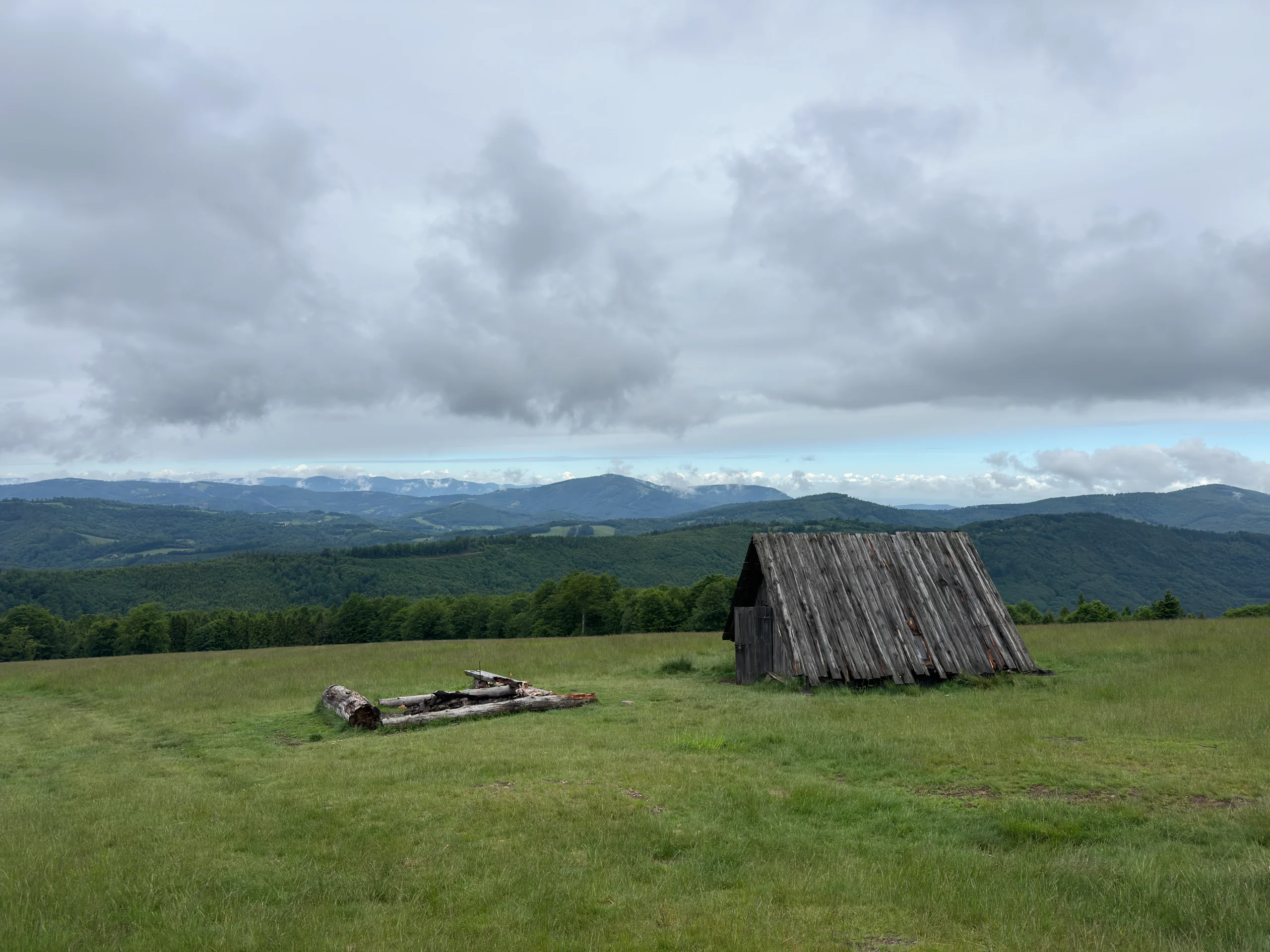
Hala Jaworowa is a large, open clearing on the ridge of the Silesian Beskids, between Kotarz and other elevations of the range, at an altitude of about 820-920 m a.s.l. It is one of the most popular places from which to admire the Beskid panorama. It makes a great stop for those visiting the Kotarz summit, as well as a destination for a hike to camp in a tent or simply enjoy the views.
In the past the clearing was intensively used for grazing, which is typical of many places in the Beskids. Today it has remained primarily an open viewing space that has preserved its natural, slightly "raw" character. Only a shepherd's hut has survived on the clearing.
Depending on the weather and the season, you can see here sweeping panoramas of the Silesian Beskids, ridges leading towards Kotarz and Malinowska Skała, and the rolling, grassy slopes typical of former shepherding pastures.
How to get to Hala Jaworowa?
Most often Hala Jaworowa appears as part of a longer route rather than a separate destination. The most popular variants are the approach from Brenna via Kotarz or a ridge crossing as part of longer routes in the Silesian Beskids.
Who is Hala Jaworowa for?
for people doing longer routes in the Silesian Beskids,
for tourists who like ridge sections and open spaces,
for people photographing mountains (one of the more "scenic" spots in the area),
as part of a full-day trip rather than a short walk.
Brenna as a base for trips
Brenna works well as a place to stay if you are planning to explore the Silesian Beskids and want quieter surroundings for a getaway with friends or family, but with easy access to mountain trails. It also makes a good base for trips to more popular towns.
From here you can quickly reach:
Wisła,
Ustroń,
Szczyrk,
Cieszyn,
the Barania Góra area.
But you can just as well simply stay put and head into the mountains without a plan, especially since most trails can be reached on foot from the centre. A big plus is that after returning from the trail you can simply sit down in the valley, rest and look at the mountains without feeling that you still have to drive somewhere.
What sets Brenna apart from other villages in the Silesian Beskids?
There is no shortage of popular tourist towns in the Silesian Beskids. Wisła attracts visitors with numerous attractions and extensive accommodation, Szczyrk is associated mainly with skiing and mountain trails, and Ustroń has long served as a spa town. Brenna remains somewhat in the shadow of its better-known neighbours, but for many people that is precisely its greatest advantage. It is a village that lets you feel the mountain atmosphere without crowds, long queues and constant rush. What sets Brenna apart?
A quieter alternative to Wisła and Szczyrk. Although Brenna lies just a dozen or so minutes' drive from Wisła or Szczyrk, the atmosphere here is completely different. You won't find crowded promenades, large hotel complexes or busy tourist centres. Even in summer and on sunny weekends it is easy to find a quiet spot by the Brennica, a free table in a restaurant or a less frequented trail leading through the forest.
Proximity to mountain trails. One of Brenna's greatest assets is its layout. The village stretches along a valley surrounded by mountains on every side, so many trails begin practically in the very centre or its immediate surroundings. You don't have to get in the car every day and look for yet another car park. In many cases you can leave your accommodation and within a dozen or so minutes find yourself on a forest path leading to Stary Groń, Błatnia or Kotarz. For weekend visitors this means more time for hiking and less time spent behind the wheel.
The perfect combination of active recreation and relaxation. Not every mountain village lets you combine intensive hiking with rest so easily. In Brenna you can climb one of the surrounding peaks in the morning, and in the afternoon sit by the Brennica, take a walk through the Tourism Park or relax by the brine graduation tower. It is precisely this balance that makes Brenna work well both for an active weekend and for a longer holiday.
A place for people who like to discover less obvious destinations. Brenna does not have as recognisable a tourist brand as Wisła or Szczyrk, which is why it has retained a more intimate character. Many people end up here by chance, looking for a quieter base in the Silesian Beskids. It often turns out, however, that this is exactly the village that best suits their style of travelling.
Frequently asked questions
Where is Brenna and how do you get there?
Brenna lies in the Brennica river valley in the Silesian Beskids, in the Cieszyn district between Ustroń, Wisła and Szczyrk. It is about 25 km from Bielsko-Biała and around an hour and 15 minutes from Katowice. By car you turn off provincial road 941; by public transport the nearest stations are Cieszyn and Skoczów, with buses onward.
Which peaks and trails can you hike from Brenna?
Trails start right in the valley. Easy options include Stary Groń (792 m, about 45-60 minutes, with a viewing tower) and quiet Orłowa (813 m). For more effort try Kotarz (974 m) via Hala Jaworowa, or popular Błatnia (917 m) with its PTTK hut. There is also the family Utopiec Fairytale Trail.
What is there to see in Brenna besides hiking?
In the village you can visit the Tourism Park, the heart of Brenna, and walk along the Brennica river. Nearby attractions include Chlebowa Chata (a traditional bread cottage with tastings), Kozia Zagroda goat farm, the Stary Groń viewing tower, a summer funfair and small beginner-friendly ski slopes at Świniorka and Horzelica.
Is Brenna a good destination for families?
Yes. Brenna is calm and family-friendly, with the easy Stary Groń trail and tower, the Utopiec Fairytale Trail full of wooden legend figures, Chlebowa Chata and Kozia Zagroda, a summer funfair, and small, gentle ski slopes at Świniorka and Horzelica that suit beginners and children learning to ski.
Why choose Brenna over Wisła or Szczyrk?
Brenna is a quieter alternative just minutes from Wisła and Szczyrk, without crowded promenades or big hotel complexes. Its greatest asset is the layout - many trails begin right in the centre, so you rarely need the car. It is ideal for combining active hiking with relaxing by the Brennica or in the Tourism Park.
And if you want to stay up to date with more travel inspirations, check out our socials!