
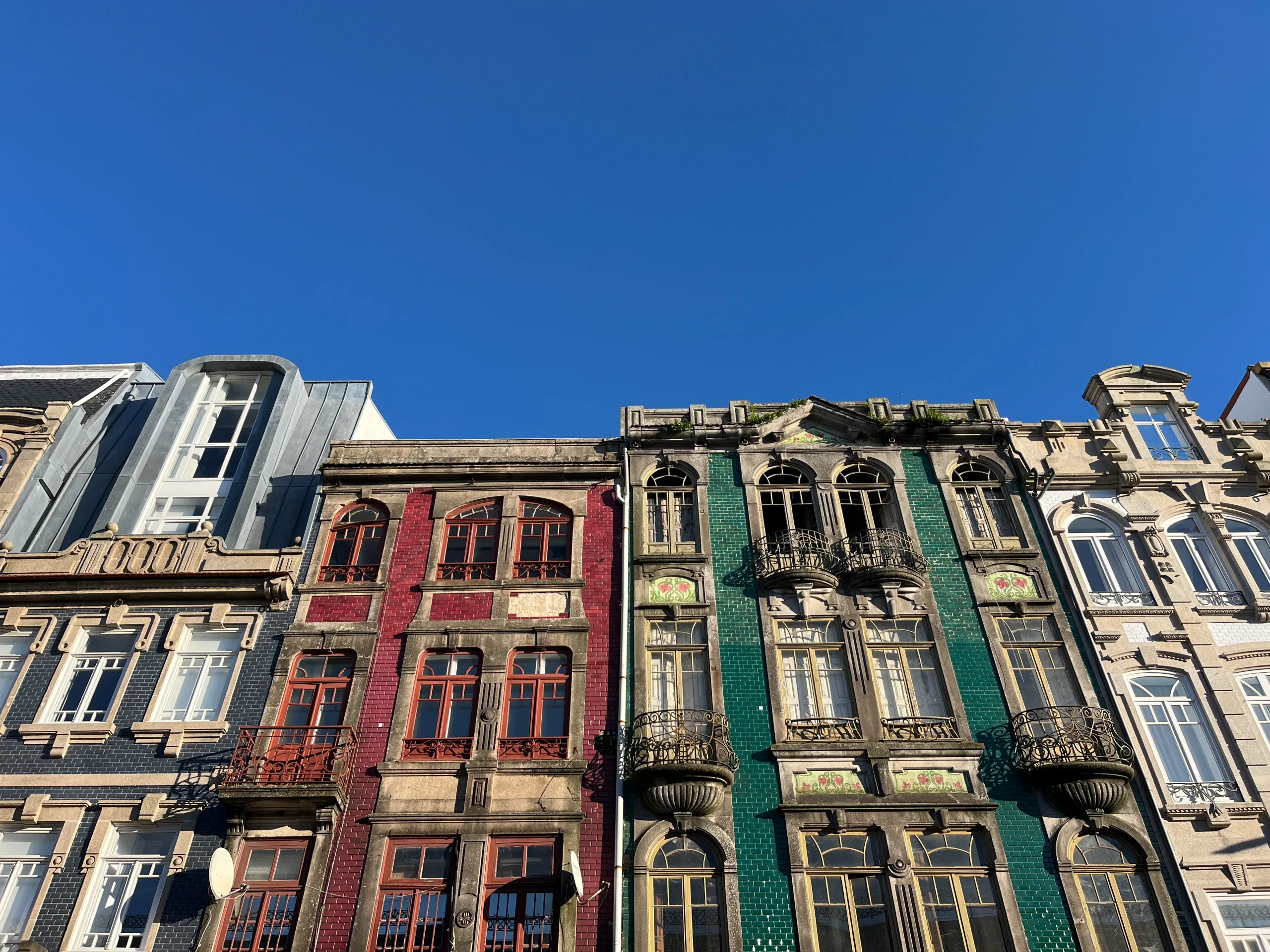
Porto - what to see: Ribeira, Lello, azulejos and wine cellars
In this article, we will show you the charming corners of Porto, from the most important monuments and viewpoints, through atmospheric gardens and picturesque streets, to the famous vineyards on the other side of the Douro River. This city surprised us very positively, and we feel that it is still not as popular among Polish tourists as it deserves. We want to change that! We invite you on a trip to Portugal!
And if we manage to convince you and you need advice on transport, accommodation and other tips, please check out this article:
Porto - practical tips: airport transfer, metro and where to stay
Everything you need to know when visiting the second largest and most popular city in Portugal.
Table of contents:
Porto
Porto is the second largest city in Portugal, with a population of about 230-240 thousand, and over 1.7 million with the agglomeration. The city delights with its incredibly diverse terrain - it rises on steep hills sloping towards the Douro River. Thanks to this, Porto offers dozens of spectacular viewpoints (miradouros), narrow, atmospheric streets and terraced buildings that create a unique atmosphere.
The historic center of Porto was inscribed on the UNESCO World Heritage List in 1996. There are many historic buildings here - from churches decorated with azulejos, through monumental bridges and Art Nouveau palaces, to the famous São Bento station, whose interior is a true work of art.
Porto combines history, tradition, wine culture and an amazing location. That is why the city is so quickly winning the hearts of tourists - although it is still not as crowded as Lisbon or the south of Portugal.
What to see in Porto?
We leave you a map of the most important places to visit, so that you don't miss any of the attractions while walking around Porto, and also to make it easier for you to plan the order of your visit!
Google Map with locationsRibeira District
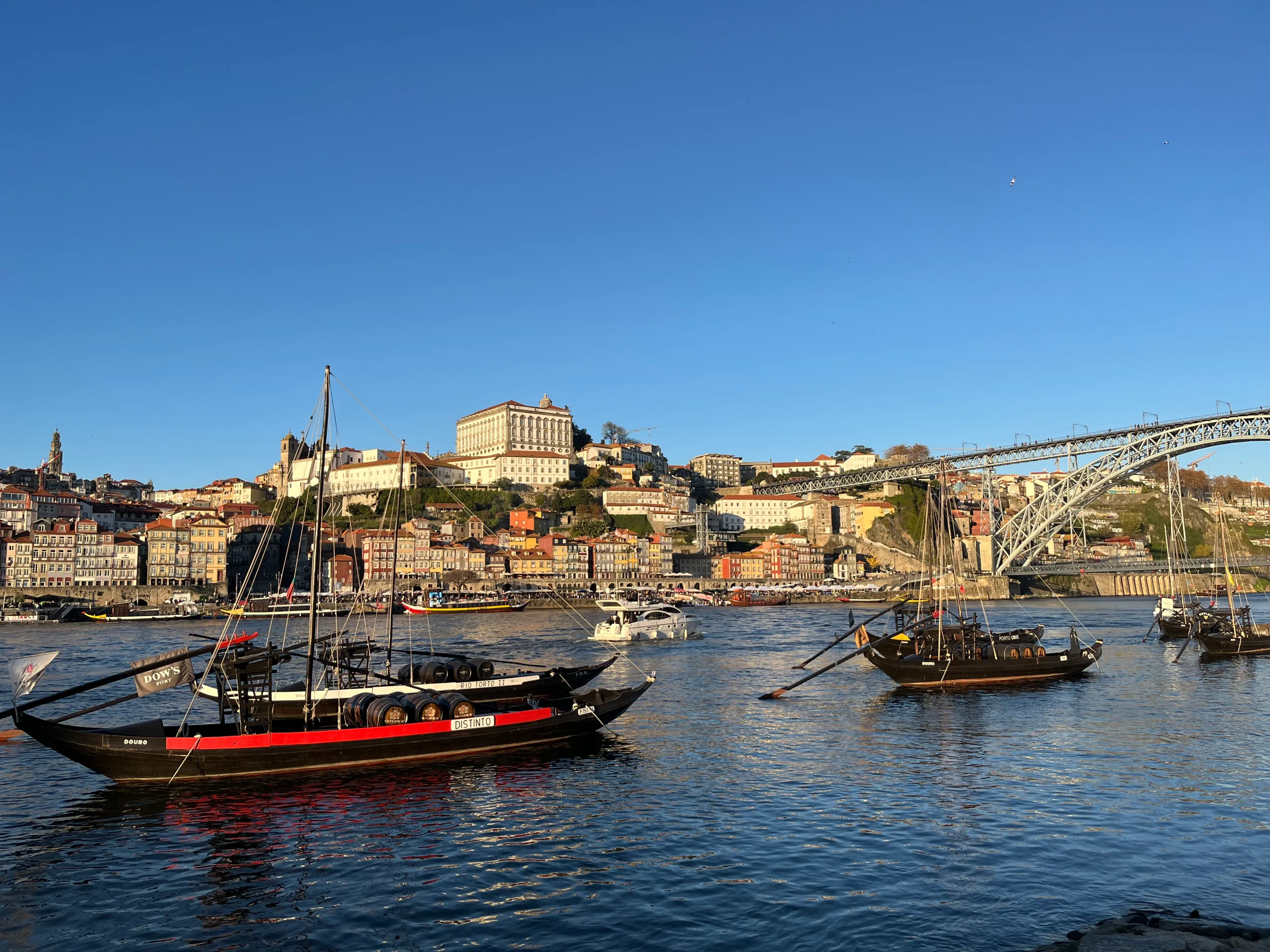
Ribeira is one of the most recognizable and most visited districts in Porto. This historic place, inscribed on the UNESCO World Heritage List, delights with its colorful houses, narrow streets full of azulejos and the unique atmosphere of the old city. It is here that you will find some of the most beautiful monuments of Porto, as well as numerous restaurants serving local cuisine. It is worth taking a walk through the local colorful streets, because many of them hide numerous monuments. Wandering among the houses, it is not difficult to find the main road R. das Flores, which leads from the São Bento train station to the Infante Dom Henrique square next to the Stock Exchange Palace and the market building.
Be sure to also go down to Cais da Ribeira, the riverside promenade stretching along the Douro River. The promenade is bustling with life at almost any time of the day. You will find street musicians, colorful rabelo boats and numerous bars and pubs with a view of the river. It is from here that the view of the most famous symbol of Porto, the Luís I Bridge, extends.
Square in front of the Natural History Museum
View from the square in front of the Sé Cathedral
R. das Flores
Largo da Pena Ventosa
Luís I Bridge
Ponte Dom Luis I is the most popular two-level steel bridge and the most recognizable landmark of the city. It connects the two banks of the Douro River: the historic Ribeira with Vila Nova de Gaia. The bridge is distinguished not only by its architecture, but also by the views it offers from both levels. The lower part has a road for cars and narrow sidewalks for pedestrians on both sides. The upper level is a route for metro trams and a wide passage for walkers. It is from the upper part of the bridge that one of the most beautiful panoramas of Porto extends over the colorful houses of Ribeira, the Douro River and the Gaia waterfront with its wineries. The bridge is especially worth visiting at sunset or in the evening, when its structure is beautifully illuminated.
The steel structure of the bridge may remind you of the one in Paris, which also attracts crowds of tourists, and it's no wonder because the bridge was designed by a student of the famous Gustave Eiffel - Teófilo Seyrig. The construction of the bridge was completed at the end of the 19th century, and its name commemorates the then king of Portugal, Luís I.
View of the bridge from Miradouro da Serra do Pilar
View from the promenade
Sé do Porto Cathedral
The Roman Catholic Cathedral of the Assumption of the Blessed Virgin Mary is one of the most important and oldest monuments in the city. The temple is located in the heart of old Porto and, like the entire Ribeira district, has been inscribed on the UNESCO World Heritage List.
The construction of the cathedral began in the 12th century, which is why its body has clear features of the Romanesque style - massive walls, austere interiors and characteristic towers. Over the following centuries, the temple was expanded and rebuilt, which gave it an extremely interesting, multi-layered character. Today you can see elements of different styles mixed together. In addition to visiting the richly decorated cathedral, you can also visit the cloisters decorated with beautiful white and blue azulejo tiles depicting biblical scenes and the towers with a view of the city. Admission is paid, but it is really worth looking inside, especially if you are interested in the architecture and history of Porto.
Directly in front of the temple is the wide Terreiro da Sé, or cathedral square. The central point here is the Pelourinho do Porto - an ornate, spiral pillory, formerly a symbol of municipal authority and a place of punishment. Today it is an interesting element of architecture, perfectly harmonizing with the austere body of the cathedral.
From the square you can go down to Miradouro da Rua das Aldas, one of the most beautiful viewpoints of the old town of Porto.
Going down even further, you will reach the church of São Lourenço (also known as Igreja dos Grilos), and just behind it there is another viewpoint - Miradouro da Igreja de São Lourenço. This is a great place to capture the city panorama.
Stock Exchange Palace
Palácio da Bolsa (Stock Exchange Palace) is one of the most important attractions in Porto, located right next to the main Infante D. Henrique square. This 19th-century building impresses with its elegant, classicist facade, but it is its interiors that make a real impression, which is why the palace is definitely worth visiting from the inside.
The most famous and photographed place in the palace is the Arab Room (Salão Árabe). A beautiful room inspired by Moorish architecture, richly decorated with gold, ornaments and openwork details. This is where the most important receptions and social gatherings of the local elite took place. In addition to it, during the tour you can see, among others: the Courtyard of Nations (Pátio das Nações), the Presidential Room and the Portrait Cabinet, the Assembly Room and numerous elegant corridors. The tour takes place only with a guide and lasts about 30 minutes. It is available in several languages. Tickets are best purchased online (in advance during the season) at a price of €14 for a regular ticket and €9.50 for a reduced ticket. Opening hours can be checked on the official website palaciodabolsa.com. Right next to the palace is the richly decorated St. Francis Church in Porto (Igreja de São Francisco). Tickets include admission to the church and the adjacent museum.
São Bento Train Station
Estação de São Bento is the main train station in Porto, which is not only a point for travelers, but also an attraction in itself. Even if you are not going to use the train, it is worth going there to see the beautiful hall covered with azulejos depicting scenes from the country's history. Over 20,000 beautiful white and blue tiles depicting, among other things, important battles, royal ceremonies and the daily life of former inhabitants, were created at the beginning of the 20th century, and their author is the famous artist Jorge Colaço. The station is located just a few minutes' walk from the most important monuments of the center.
Porto City Hall
Porto City Hall (Câmara Municipal do Porto) is a representative administrative building that houses the seat of the city authorities. It is located in the upper part of the city, right next to the main Trindade metro station, making it easy to reach from different parts of Porto. Its central element is a 70-meter tower with a view of the city. Upon entering, you will immediately notice the black marble stairs covered with a red carpet. In front of the building is the large Praça General Humberto Delgado, which often becomes a place for city events, meetings and a popular photo spot for tourists.
Lello Bookstore
One of the most famous bookstores in the world and at the same time one of the most unusual attractions in Porto. According to many stories, it was the interior of Lello that was to be an inspiration for J.K. Rowling when creating the world of 'Harry Potter'. Just look at the iconic, winding red stairs - it's hard not to associate them with the magical stairs of Hogwarts, which lived their own lives. The bookstore delights with its neo-Gothic decor, rich decorations, carved details, colorful stained glass windows and the warm light of illuminated shelves full of books. Even if you are not a fan of the series about the young wizard, the interior makes an absolutely spectacular impression. The popularity of this place means that queues form every day (also out of season). Taking a photo on the empty stairs is a miracle, but you can treat it as an entrance to your own version of a magical story and imagine that you are pushing your way through the students of Hogwarts. Admission costs €10, but this amount can be used as a discount when buying a book (it is worth remembering, however, that the prices of books are significantly higher here than in other Portuguese bookstores). Be sure to buy tickets online for a specific time, which gives you certainty of entry and saves a lot of time, but is not a guarantee of skipping the queue. Tickets and other information available on the website - link to livrarialello.pt.
Bolhão Market
A large, incredibly atmospheric municipal market where you'll find literally everything - from fresh fish, fruits, local cheeses and sweets, to Portuguese spices, handicrafts and various souvenirs. The market is located near the city hall, so it's worth stopping by even for a moment while exploring the center. Colorful stalls, local vendors and the smell of fresh products create a unique atmosphere that's hard to find in typical tourist spots. Additionally, various events, tastings and presentations of local products often take place at Mercado do Bolhão. You can find detailed information, a list of stalls and an event calendar on the official website: link to mercadobolhao.pt.
Churches and Chapels
Chapel of Souls
One of the most recognizable temples in Porto and an azulejo icon. Capela das Almas de Santa Catarina is a small but extremely striking chapel that catches the eye. Its facade is almost entirely covered with traditional Portuguese azulejos in shades of blue, creating huge, detailed compositions depicting scenes from the lives of St. Francis of Assisi and St. Catherine. There are over 15,000 tiles in total, made in the 19th century by one of the most famous ceramic factories in Portugal.
Although most people admire the chapel from the outside, it's also worth looking inside (admission is free). The interior is more modest, but preserved in a typical Portuguese style with a classic altar. The chapel is located on Rua de Santa Catarina, one of the main shopping streets in Porto, just a few minutes' walk from the Trindade metro station.
St. Ildefonso Church (Igreja de Santo Ildefonso)
Another magnificent temple decorated with hundreds of blue azulejos. St. Ildefonso Church is an 18th-century temple located right by the popular Praça da Batalha, just a few steps from the historic center of Porto. Construction was completed in 1739, and the entire building is maintained in the late Baroque style, typical of Portuguese sacred architecture of that period. The most characteristic element of the church is its facade covered with over 11,000 blue and white tiles depicting scenes from the life of St. Ildefonso and important religious events.
The interior of the temple is also worth visiting (entrance €1) and you will find a classic Baroque altar, beautiful stained glass windows and golden decorations. St. Ildefonso Church is a beautiful example of Portuguese sacred art and should undoubtedly be on your Porto sightseeing map, especially if you love architecture and azulejos.
Serra do Pilar Monastery
Mosteiro da Serra do Pilar, located on the Serra do Pilar hill on the Vila Nova de Gaia side, is one of the most unique architectural structures in the Porto area. This place towers over the Douro River and offers some of the most beautiful panoramic views of the historic city center and the famous Luís I Bridge.
Igreja do Mosteiro da Serra do Pilar
View from Miradouro da Serra do Pilar
The greatest uniqueness of this place is its circular temple. Such a solution is extremely rare in sacred architecture, which further distinguishes the monastery from other Portuguese monuments. In 1910, the church and monastery were recognized as a national monument, and subsequent parts of the complex were listed as objects of public importance in 1935. Since 1996, along with the historic center of Porto and the Luís I Bridge, the complex has been on the UNESCO World Heritage List.
The Igreja do Mosteiro da Serra do Pilar church is relatively small, and its circular interior gives it a very unusual, even austere character. Entrance to the temple is free, however, during our stay the church was closed due to renovation work.
Just in front of the monastery itself stretches a vast square, which is one of the most crowded viewpoints at sunset.
Clérigos Church
The Igreja dos Clérigos complex together with the characteristic Torre dos Clérigos is one of the most recognizable symbols of Porto. The Baroque church captivates with its elegant, slender facade and richly decorated interior, which is free to enter. The entrance is on the right side of the building, where the entrance to the museum is also located. However, the greatest attraction is the 76-meter Torre dos Clérigos tower, which is reached by narrow, spiral stairs. The effort is definitely worth it, because from the top there is a beautiful panorama of Porto, including nearby attractions such as Lello bookstore, Carmo and Carmelitas Churches, parks around the hill, as well as other parts of the city.
Entrance to the tower costs €10 (regular ticket) or €7 (student ticket). Combined tickets including a visit to the museum are also available. The entire complex is one of the most interesting attractions in the center of Porto and is definitely worth spending time on both for the architecture itself and the views from the top. More information, opening hours and the possibility of buying tickets to the tower online at link to torredosclerigos.pt.
St. Anthony Congregados Church
St. Anthony Congregados Church is one of the most recognizable buildings in the center of Porto, located right by Praça da Liberdade square and literally a few steps from the main Avenida dos Aliados avenue and the historic São Bento station. From the outside, it captivates with its characteristic facade covered with blue and white azulejos depicting scenes from the life of St. Anthony of Padua. The church itself was built in the early 20th century on the site of a former chapel, and its architecture combines elements of neo-Baroque with the typical mosaic decoration of Porto.
St. Clare Church (Igreja de Santa Clara)
Although its external facade may seem quite modest, the interior is breathtaking. The church is filled with rich Baroque decorations covered with gilding, characteristic of the Portuguese style. Every wall, column and detail creates an extremely impressive, almost theatrical composition that will delight even people who are not interested in sacred architecture on a daily basis.
Entrance to the interior is paid - €4 for adults and €3 at a reduced price and for seniors. Current opening hours and additional information can be found on the official website link to santaclaraporto.pt. This is one of the most surprising places in Porto - small, hidden and often overlooked, yet absolutely worth visiting.
St. Francis Church in Porto (Igreja de São Francisco)
Igreja de São Francisco is a monument inscribed on the UNESCO World Heritage List as part of the historic city center. Although it may seem relatively austere from the outside, its interior is one of the most spectacular examples of Portuguese Baroque.
Construction of the church began in 1383 and was completed in 1425, originally as part of a Franciscan monastery. The temple was built in the Gothic style, but during the 17th and 18th centuries it underwent extensive Baroque reconstruction. It is these rich decorations that make Igreja de São Francisco called one of the most valuable Baroque interiors in Portugal. In 1833, the monastery adjacent to the church was destroyed during the civil wars. The Palácio da Bolsa was later built on its ruins, which the church is still adjacent to today.
The building is open to visitors and currently serves cultural purposes - regular masses are not held here. Tickets available at the box office include admission to both the church and the adjacent museum and catacombs. Price €11. Opening hours on the website - link to https://ordemsaofranciscoporto.pt/igrejas/.
Carmo Church (Igreja do Carmo) and Carmelitas Church (Igreja dos Carmelitas)
Although at first glance they look like one vast complex, Igreja do Carmo and Igreja dos Carmelitas are in reality two separate churches, standing right next to each other and separated by the famous, narrow "Hidden House of Porto", which is only about 1.5 meters wide. It was this "house" that enabled their construction, because in the past it was not possible to build two churches directly adjoining each other.
It is the facade of Carmo Church that attracts the most attention from tourists. A huge wall covered with white and blue azulejos depicting scenes related to Carmelite spirituality has become one of the most photographed places in Porto. The church was built in the Baroque-Rococo style between 1756 and 1768, designed by José Figueiredo Seixas. The interior captivates with richly decorated, gilded altars, typical of Portuguese Baroque.
Igreja do Carmo
On the left side is the slightly older and more modest Igreja dos Carmelitas. Its interior also hides decorated chapels and Baroque elements, although the whole is definitely more subdued than in the Carmo church.
You can visit their interiors, and admission is paid. The complex is located in close proximity to the Clérigos Tower and Livraria Lello bookstore.
Viewpoints
Clérigos Tower
Right next to the Baroque Clérigos Church stands one of Porto's most distinctive structures, the impressive 76-meter Torre dos Clérigos tower. It is one of the tallest historic towers in Portugal and one of the best viewpoints in the city. Narrow, spiral stairs lead to the very top, but the effort is definitely worth it. From the viewing platform you will see up close the most important attractions of the city, such as the Lello bookstore, Carmo and Carmelitas churches, as well as the gardens surrounding the tower. In good visibility, the panorama extends to the distant districts of Porto, a particularly unique experience at sunset. The tower stands on a hill, which additionally enhances the effect of a spectacular view of the city's red roofs.
It is possible to visit the entire complex. Entrance to the Clérigos Church is free - the entrance is on the right side, next to the museum. The tower and museum cost €10 (€7 reduced). Night entrance to the tower (available only on holidays) costs: €5 (for everyone). More information and ticket sales on the website - link to https://torredosclerigos.pt.
Clérigos Tower
Miradouro da Serra do Pilar
This is undoubtedly one of the most beautiful viewpoints in all of Porto. Ideal for admiring the Luís I Bridge, the colorful buildings of Ribeira and the Douro River winding between the city hills. It is from here that you can watch the most spectacular sunsets in Porto. Then after sunset, when the bridge lights up and the city lights up again, this time with the light of lanterns. Miradouro is located right next to Igreja do Mosteiro da Serra do Pilar, a characteristic monastery with a circular shape. During our visit, the interiors were closed, but the viewpoint itself fully compensates for the climb up the hill.
Just a few steps away is Jardim do Morro - a small, popular park eagerly visited by both tourists and residents. It's another great place to relax, have a picnic or watch the city panorama. On sunny, summer days it can be crowded here, but the atmosphere is very pleasant. The upper station of the cable car - Gaia cable car is also here.
Miradouro da Igreja de São Lourenço
This is an intimate, somewhat hidden viewpoint located right next to the São Lourenço church. Although many people pass by it unknowingly, it is one of the more charming places in the center of Porto. From the terrace there is a beautiful panorama of the undulating, diverse landscape of the city, full of colorful tenement houses and winding streets. A few steps higher there is another point - Miradouro da Rua das Aldas, located right next to Sé Catedral. Both points are a great stop while visiting the cathedral area.
Vila Nova de Gaia District
Wine cellars in Vila Nova de Gaia
Porto is famous for its wonderful fortified wines with a unique, deep aroma. On the other side of Luís I Bridge, in Vila Nova de Gaia, there are numerous wine cellars - both large ones exporting their drinks to restaurants and shops throughout Europe (such as Sandeman, Cálem, Taylor's, Cockburn's), as well as smaller, more intimate wineries producing wines mainly for their own needs (including Poças, Niepoort). We have placed many of them on our map, but there are much more of them there.
Many of them offer guided tours during which you will learn the history of the winery, the process of creating port wine and various curiosities about the aging of the drink in barrels. At the end, of course, there is a tasting of several vintages.
We went to one of the smaller and more intimate wineries - Augusto's. We were shown around a small cellar with huge barrels, and then invited to taste five wines: white and red, from different vintages. Of course, we didn't leave empty-handed and bought a bottle to take home.
The prices of such a tour vary depending on the winery and usually range between €15 and €30 for a basic package with a tour and tasting. If you want to try older vintages or order snacks, you have to expect a higher price. Therefore, it is best to check the details on the official winery websites, where you can make a reservation right away. Tours are organized in English, and outside the season an earlier reservation may not be necessary. During the season, however, availability is often very limited.
Walk around the area
Wandering the streets between the wineries, you can come across several very photogenic spots. The most famous of them is the wall street art in the form of a rabbit - an artistic installation made of various car and metal parts, placed on the corner of a building. If you have trouble finding it, we leave the coordinates: 41.136924, -8.615011.
Another interesting place is the azulejo stairs. It's harder to find them, so head here: 41.135360, -8.613741
It is also worth taking a walk along the local promenade with a beautiful view of the Luís I Bridge, characteristic tenement houses on the other side of the Douro River and majestic wine cellars. Along the river there are boats of individual wine producers located in this district, which once transported the drink to other regions of Portugal and abroad. Now they are an ornament fitting into the surroundings, creating views like from a postcard. Walking along the waterfront you will find plenty of restaurants and atmospheric shops, e.g. with sardines in designer cans or famous pastel de bacalhau in various variants. Prices are higher than in supermarkets or regular bars, but it's really worth taking a look just for the decor and atmosphere of these shops.
In addition to visiting the vineyards, you can also go to the Chocolate Museum, where you will learn the history of the development of factories and test various types of chocolate. Check it out yourself on the official website - link to wow.pt
Additional attractions in Porto
Historic tram No. 1 and 18
In Porto, it's worth taking a ride on historic trams No. 1 and 18, which are an interesting city attraction and allow you to feel its old atmosphere. The cost of a one-way ticket is €6. The most picturesque is the route of tram No. 1, which runs from the Infante stop (near the Stock Exchange Palace) along the Douro River and leads all the way to the seaside district of Foz do Douro. This is a great option if you want to combine a pleasant ride with the possibility of a walk by the ocean.
During the season, it can get really crowded at the stops and a long queue of people waiting forms. Traveling off-season, we didn't have this problem and got on the tram without a long wait. Below we include a photo with the timetable from November 2025, which may be helpful when planning your trip.
Departure times from Foz do Douro
Map and price list (2025)
Tram number 1
Interior of historic tram
Cable cars
On the other side of the Luís I Bridge, in the Vila Nova de Gaia district, there is the Gaia Cable Car cable car. It is a convenient and very scenic way to get from the lower part of the waterfront to the upper level of the district, in the vicinity of Jardim do Morro park and the Igreja do Mosteiro da Serra do Pilar cathedral. You can choose a one-way trip or buy a round-trip ticket. The cost of the trip is €10 round trip (children 5-12 years old: €5), €7 one-way ticket (children: €3.50). On the official website you will find family packages, opening hours in individual months, additional information and the possibility of buying a ticket online: link to https://gaiacablecar.com.
The ride is relatively short, but very scenic, it's a good solution if you want to save yourself several hundred stairs and at the same time see the panorama of Porto from a different perspective.
In the Ribeira district there is the Funicular dos Guindais funicular, which connects the lower level of the waterfront with the upper part of the city, running right next to the historic city walls. The ride takes about 2 minutes, but allows you to avoid a very steep climb. The price of a one-way ticket is €3.5. Current information, operating hours and prices can be found on the website: link to https://introducingporto.com/funicular-dos-guindais.
Funicular dos Guindais
Other places worth visiting
Estádio do Dragão football stadium - a modern stadium of FC Porto club, one of the most important sports facilities in Portugal. You can not only see it from the outside, but also visit it as part of special tours of the locker rooms, pitch and club museum.
Casa da Música - an iconic, futuristic building that is one of the symbols of modern Porto. Concerts and cultural events are held inside, and the building itself is interesting from an architectural point of view. You can visit it with a guide or simply approach it to see its characteristic shape.
Parque de São Roque - a large, quiet park ideal for a break from the hustle and bustle of the city. You will find walking paths, sculptures, fountains and lots of greenery. This is a good place for a short picnic or a quiet walk among the trees.
Jardim do Morro - one of the most popular viewpoints in the center of Porto, especially at sunset. It is located on the Vila Nova de Gaia side, right next to the upper level of the Dom Luís I bridge. An ideal place for photos and a moment of relaxation on the grass.
Jardim do Roseiral - a small, charming rose garden overlooking the Douro River. It is a quieter place than other gardens in the center, ideal for a romantic walk or a short break from sightseeing.
Jardins do Palácio de Cristal - one of the most beautiful gardens in Porto - extensive, full of paths, fountains, viewpoints and peacocks that freely roam the area. You can spend several hours here peacefully, admiring the city panorama and the greenery surrounding the former palace grounds.
Trips outside Porto center
Foz do Douro and Matosinhos (Porto coast)
The Porto coast is primarily stretches of kilometers of wide, sandy beaches, ideal for walking, relaxing, and in warmer months also for swimming. It's a great complement to intensive sightseeing in the center.
How to get there?
Foz do Douro - lower part of the coast
To get to Foz do Douro, you can choose a picturesque route along the Douro River, on a historic tram line 1 or 18, departing from the center of Porto. The ride is not only a convenient way to reach the ocean, but also a great attraction in itself. Atmospheric carriages, views of the waterfront and bridges and about 20 minutes of peaceful travel is an interesting experience (we describe the details about the tram earlier in the article).
Matosinhos - upper part of the coast
If you want to visit the wide beaches of Matosinhos or go to the local restaurants famous for grilled seafood, the easiest way to get there is by metro. Just get on line A (blue) and get off at one of the final stations, from where only a short walk separates you from the ocean.
What to see?
Above all, we recommend a walk along the beautiful promenade along the ocean from the Matosinhos district to Foz do Douro (or vice versa). The boardwalk runs right by the sea all the time, without the need to go down to the street. Starting from Matosinhos, it's worth starting with a historic monument, which is Igreja Paroquial de Matosinhos - a church that looks quite inconspicuous from the outside, but inside it delights with an extremely rich Baroque interior. Before you go there, however, be sure to check the opening hours. Another point is a small and quite modest market Mercado Municipal de Matosinhos - definitely less touristy and much smaller and more modest than the one in the center of Porto, but if you have it on the way, it's worth stopping by even for fresh fruit.
Mercado Municipal de Matosinhos
Anemona
Then we head towards the wide, sandy beach of Matosinhos, which in November was practically empty and full of seagulls, ideal for a quiet walk and catching the sea atmosphere. Further, the route leads with a wide concrete boardwalk to another attraction, which is Castelo do Queijo - a small fortress standing right by the ocean, next to which on the other side of the road is the vast Parque da Cidade do Porto. Later we go on a wooden boardwalk along the rocky coast, where the sea crashes against large boulders, and small, charming beaches appear between them. Along the way, we also passed the photogenic point Jardim da Pérgola, and along the entire route there are numerous cafes and bars where you can sit down and enjoy the view of the ocean.
Beach in Foz do Douro
Castelo do Queijo
Jardim da Pérgola
Fort St. John the Baptist of Foz
The boardwalk ends at the Fort St. John the Baptist of Foz, standing right at the mouth of the Douro River to the ocean, from where only a few steps separate us from Jardim do Passeio Alegre. This is where the link to historic tram section stop is located - exactly Passeio Alegre - so if you don't want to walk back, you can continue your journey by cult tram towards the center of Porto.
Aveiro
A place about an hour's train ride from Porto is Aveiro. You may associate it with the characteristic, colorful houses in the Costa Nova district. It's a truly vacation place, where palm trees grow and the ocean roars on one side of the promenade, and on the other side there are beautiful, striped, well-kept houses looking like from a fairy tale. The place is really charming and definitely worth visiting, especially if you spend a longer weekend in Porto. In addition to walking along the popular promenade, it is also worth going to the other side to the wide, sandy beaches, in the vicinity of which you will also find colorful lighthouses at the Barra canal and long wooden boardwalks ideal for a walk at any time of day.
Being in Aveiro, you can't miss the center itself, which is famous for its main canal, on which colorful boats float like in the Portuguese version of Venice. It's worth getting lost in the streets, sitting down for coffee and feeling the peaceful atmosphere of the town. In Aveiro you can easily spend the whole day, there are enough attractions here so you don't have to rush and enjoy the unique atmosphere of this place.
Guimarães
We decided to go to the town of Guimarães, full of history, located about an hour's train ride from Porto. We devoted the whole day to this trip to walk the streets of the historic old town without haste, taking breaks for Portuguese pastel de nata and soaking up the local atmosphere. The town really delighted us, it has a unique, traditional character, and the number of places worth seeing there turned out to be so large that we decided to prepare a separate article, to which we direct you.
If you spend a longer weekend in Porto and would like to look deeper into the roots of Portugal, then Guimarães will be a great idea for an interesting and very atmospheric trip!
Summary
In our opinion, Porto is an extremely beautiful and charming city, ideal for a short city break, during which atmospheric alleys, mosaic tenement houses, the smell of coffee and obligatory pastel de nata await you at every step. Porto can surprise with its diversity: from historic districts inscribed on the UNESCO World Heritage List, through magnificent viewpoints and vineyards, to the wide, sandy beaches of Foz do Douro and Matosinhos.
This is a city that is really worth seeing - whether for a weekend or as part of a longer trip to Portugal. We believe you will fall in love with it just like we did!
Frequently asked questions
What are the must-see attractions in Porto?
Start with the Ribeira district - colorful riverside houses on the UNESCO list - and walk across the two-level Luís I Bridge, designed by a student of Eiffel. Also worth seeing are the Romanesque Sé Cathedral, the Stock Exchange Palace with its golden Arab Room, São Bento station with over 20,000 azulejos, and the famous Lello Bookstore (entry €10), which inspired the world of Harry Potter.
How do I visit Porto wine cellars in Vila Nova de Gaia?
Simply cross the Luís I Bridge to the other side of the Douro, to the Vila Nova de Gaia district. You'll find cellars of large producers there (Sandeman, Cálem, Taylor's, Cockburn's) as well as smaller wineries like Poças or Niepoort. A tour with a tasting of five wines usually costs €15-30 for the basic package, and in high season it's best to book online in advance. Along the way, look out for the promenade with rabelo boats and the rabbit street art (41.136924, -8.615011).
Which churches in Porto have the most beautiful azulejos?
The best known are Capela das Almas on Rua de Santa Catarina - over 15,000 tiles with scenes from the lives of St. Francis of Assisi and St. Catherine (free entry) - and St. Ildefonso Church at Praça da Batalha with over 11,000 azulejos (interior entry €1). A huge azulejo wall also decorates Igreja do Carmo, separated from the Carmelitas church by the famous 1.5-meter-wide Hidden House.
Where are the best viewpoints in Porto?
The best panorama of the center is from the 76-meter Torre dos Clérigos tower (€10, student ticket €7). For sunset, head to Miradouro da Serra do Pilar on the Gaia side, with views of the Luís I Bridge, Ribeira and the Douro river. It's also worth visiting Miradouro da Rua das Aldas next to the Sé Cathedral and the terrace by the São Lourenço church with its panorama of colorful tenement houses.
How do I walk the Porto coastline from Matosinhos to Foz do Douro?
Take metro line A (blue) to the final station in Matosinhos and follow the oceanfront promenade towards Foz do Douro. Along the way you'll pass the wide Matosinhos beach, the Castelo do Queijo fortress, Parque da Cidade and a wooden boardwalk running along the rocky coast. The walk ends at the St. John the Baptist fortress at the mouth of the Douro, from where the historic tram no. 1 takes you back to the center (€6 one way).
And if you want to stay up to date with more travel inspirations, check out our socials!