
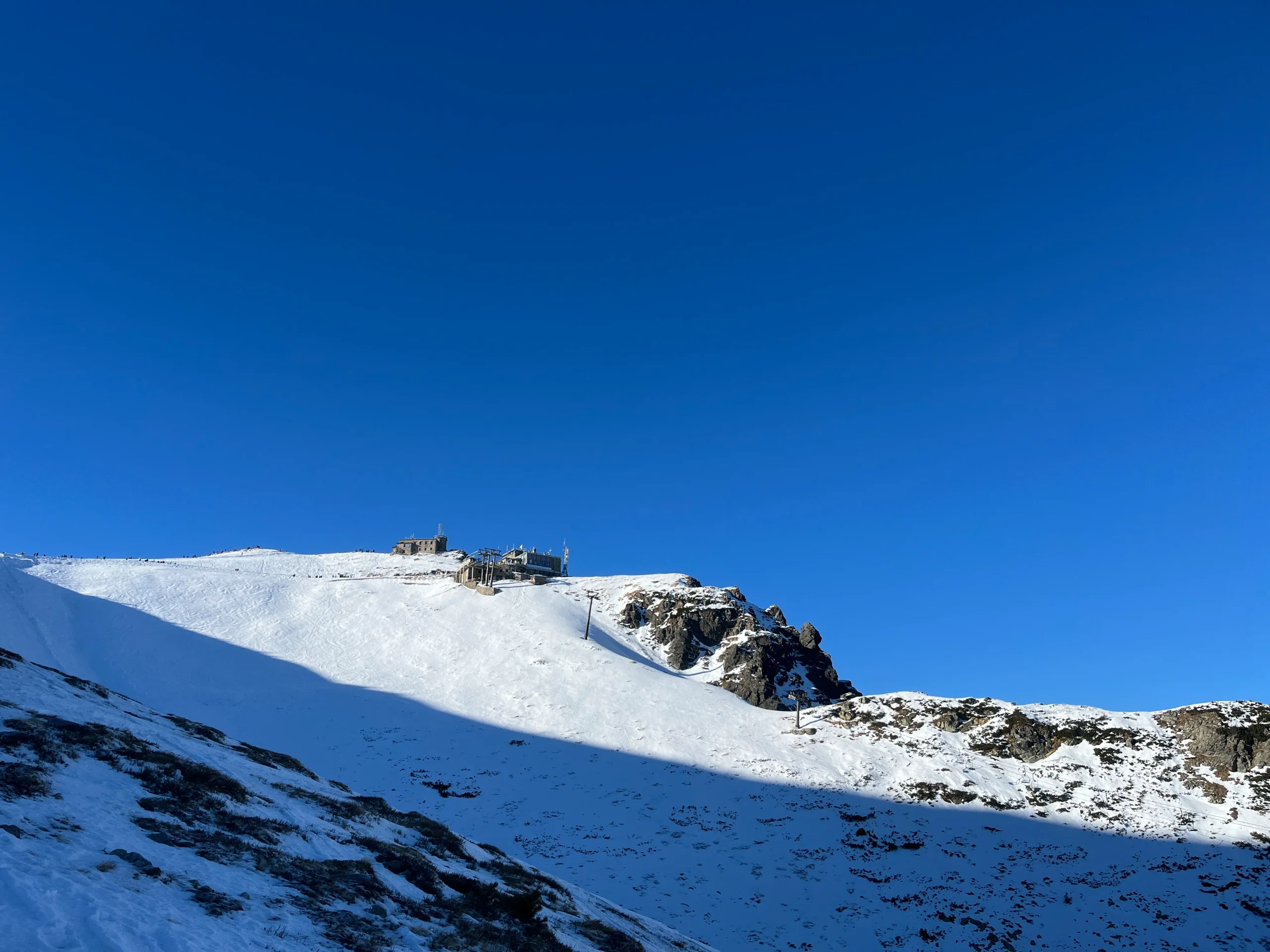
Kasprowy Wierch - winter trail from Kuźnice and cable car
In this article, we'll take you on a winter trek in the Tatras that guarantees unforgettable views. Kasprowy Wierch is one of the most popular peaks in Poland's highest mountain range, attracting crowds of tourists year-round. We'll show you how to prepare for the journey in winter conditions, what to pack in your backpack, which trail to choose, and what to expect along the way. Enjoy the read!
Table of contents:
Kasprowy Wierch
Kasprowy Wierch is one of the most famous peaks in the Western Tatras, rising to 1987 m above sea level. You can reach the summit by cable car from Kuźnice, which is also where the hiking trail begins. Kasprowy Wierch is also a popular destination for winter recreation, as it has ski slopes. In addition to the main cable car, there are also chairlifts from Goryczkowa Valley and Gąsienicowa Valley, which are mainly used by skiers in the winter season. Just below the summit, there is a small shelter that serves as a food point and waiting area for people descending by cable car to Kuźnice.
Kasprowy Wierch summit
View from Kasprowy Wierch summit
Although Kasprowy Wierch is one of the higher peaks of the Tatras, it is not technically very difficult. However, it's important to remember that the route is quite long and time-consuming, so despite the undemanding nature of the ascent, it's worth preparing properly, especially in winter and changeable weather conditions. Due to its easy accessibility, both on foot and by cable car, as well as the spectacular Tatra views, Kasprowy Wierch enjoys enormous popularity among tourists throughout the year. It is one of the most frequently visited points in the Tatras, so people seeking peace and solitude in the mountains should be aware that this is not a place completely free from crowds.
Kasprowy Wierch in Winter
As we mentioned above, Kasprowy Wierch is not a very demanding peak, but in winter, having proper equipment and exercising good judgment is mandatory. We went in December, when there was relatively little snow and temperatures hovered around zero. Snow cover appeared only in the higher mountain parts, but the snow was hard and compact, and in many places there was ice. In these conditions, crampons and ice axes proved essential. Without them, reaching the summit would not only be more difficult, but above all dangerous, especially on the last section of the route, where there was already quite a lot of snow and the trail was very narrow in places. An ice axe can also be useful, especially in case of slipping on an icy section of the ascent. It is very important to check current TOPR communications and weather forecasts before going into the mountains, and to adjust your trip plan to the prevailing conditions. In winter, the situation in the Tatras can change very dynamically and even a seemingly easy route can become demanding. Check out the tips at the end of the article!
Trail Variants
Blue and yellow trail from Kuźnice via Hala Gąsienicowa (described below)
Yellow - blue - yellow trail from Kuźnice (can be done on the return route)
Green trail from Kuźnice (easiest and shortest route to the summit)
Cable car from Kuźnice
Blue and Yellow Trail from Kuźnice via Hala Gąsienicowa
Parking
Parking spaces in Kuźnice itself are very limited. If you're staying in Zakopane, it's most convenient to use public transport, which runs regularly to Kuźnice, where there is a large bus hub. For drivers, the best solution is paid parking in the Bystra Dolna area. Depending on the location chosen, walking to the start of the trail in Kuźnice takes about 15 minutes. This is a convenient and frequently chosen option, especially during the season and on weekends.
Map
- Trail length:
- 7,3 km
- Duration:
- 3:53 h
- Elevation gain:
- 1000 m
- Difficulty level:
- easy
Trail Description
We start the route in Kuźnice, right by the Tatra National Park ticket office, where there is the first trail junction. We head along the blue trail towards Nosal. Right from the beginning, the route climbs quite intensively upwards and leads along a wide, rocky road through the forest. At the first junction, we continue hiking on the blue trail, following the signs to Hala Gąsienicowa. During the ascent to Boczań, it's worth turning around from time to time, because the first views start to appear here, and snow gradually accumulates on the trail. At this point, crampons become essential, especially in winter. We reach Przełęcz między Kopami (Pass between Kopami), where the yellow trail meets the blue trail. We still stick to the blue markings, heading towards Hala Gąsienicowa, which - according to the signpost - is about 30 minutes away. The route descends steeply down through the forest for a while, leading us directly to Hala Gąsienicowa.
Passage through Boczań
Hala Gąsienicowa
At this point, we can take a break and go down to the Murowaniec shelter, or - like us - continue with a gentle ascent on the yellow trail towards Kasprowy Wierch. This section is exceptionally scenic, as the route flattens out for a while, and all around there are beautiful panoramas of snow-covered Tatra peaks. The trail leads between low dwarf pine bushes and quickly brings us to another signpost informing that about 55 minutes remain to the summit.
From this moment, the goal of our hike is clearly visible, and the route begins to lead decidedly more steeply upwards. In the steeper sections, there are stairs, which in winter are often completely covered with snow. The last section is narrow, so special caution is needed when passing other tourists. From here, you can clearly see the upper cable car station and the summit of Kasprowy Wierch itself, and on the opposite side, the powerful, high Tatra ridges.
We reach Przełęcz Sucha (Dry Pass), from where a typically winter panorama of the Tatras unfolds. Only about 5 minutes of ascent separate us from the summit. If you want to expand the views to the east, it's worth walking a bit in the opposite direction of the pass - to Beskid (2012 m a.s.l.) - from where Świnica and Kozi Wierch, towering over the area, present themselves beautifully.
The hiking trail to Kasprowy Wierch itself is not particularly crowded, so the ascent passes quite pleasantly and calmly. The situation changes only near the summit, where we already encounter a large number of tourists who came up by cable car from Kuźnice. Many of them also decided to take a short walk towards Beskid, where it was slippery, windy, and icy in places. Special caution was needed in this area, especially in winter.
For the return route, we choose the yellow trail we ascended earlier. Once again, we realize how invaluable having crampons was - they not only made descending much easier, but above all made it decidedly safer. We pay special attention to this because during our expedition we encountered many people descending without crampons or ice axes, who had clear problems maintaining balance and were slipping on the icy trail.
After returning to Hala Gąsienicowa again, we take a short break. The low temperatures, however, don't favor a longer rest, so we move on, climbing again to Przełęcz między Kopami. From this place, we have two return options: we can descend the same route on the blue trail or choose the yellow trail through Dolina Jaworzynki. It's definitely worth choosing the second option to diversify the route and see the Tatras from a slightly different perspective. Both trails meet again at the TPN ticket office in Kuźnice, exactly where we started our hike.
Cable Car
One of the most characteristic elements of Kasprowy Wierch is the cable car, which has been one of the greatest attractions of the Tatras for years. The cable car operates year-round with breaks for periodic inspections or in case of unfavorable weather conditions. The lower station is located in Kuźnice, from where you can ride almost to the summit itself, to an altitude of 1959 m a.s.l.
The cable car consists of two sections - Kuźnice - Myślenickie Turnie and Myślenickie Turnie - Kasprowy Wierch. The ride takes about 15-20 minutes and the journey itself provides amazing scenic impressions.
In the winter season, the cable car enjoys enormous popularity among both hiking tourists and skiers. It's worth remembering that the number of seats is also limited in summer, so it's best to buy tickets in advance online on the official website link to https://www.pkl.pl. During high season, it happens that tickets for a given day sell out very quickly. At the same link, you can check the price list in advance, see the conditions at the summit through the camera, and find more information.
It must be remembered that even after riding the cable car, we are in the high parts of the Tatras, where winter conditions can be very demanding, so appropriate clothing and equipment are mandatory - especially if you're going to the nearby Beskid viewpoint (2012 m a.s.l.), consider taking crampons with you.
Tatra National Park
Dogs are completely prohibited on the areas and trails mentioned in this article. It's worth taking this into account when traveling with a pet.
Entry to the Tatra National Park requires entrance tickets. The cost for a day is 11 PLN regular and 5.50 PLN reduced. 7-day tickets are also available. Tickets can be purchased at ticket offices along the trails, or online - link to https://tpn.gov.pl.
Tatras in Winter - What to Know
When going to the Tatras in winter, it's absolutely essential to check the avalanche hazard and current tourist communications regarding trail conditions. You can find this information on the official websites link to https://tpn.gov.pl and link to https://topr.pl. On these sites, as well as on most popular online tourist maps, you can check which trails or their sections are closed and in which periods restrictions apply.
Before going into the mountains, be sure to follow current weather conditions, as in winter they can change very dynamically.
If you're going to popular peaks, it's worth checking the conditions at the top in advance using internet cameras. Example page with a view from Kasprowy Wierch: link to https://www.pkl.pl
Make sure you have appropriate tourist equipment, and in the case of more difficult routes, more specialized equipment. Even if the trail doesn't seem demanding and the snow cover is small, crampons (or ice axes) and an ice axe are the basis for safe movement in winter. In the higher parts of the mountains, there is often more snow, and ice occurs in places.
Also remember that in winter the day is much shorter, so plan your route so you don't have to worry about returning after dark. Just in case, always have a headlamp with you.
Trail Summary
During our expedition, we covered a total of about 20 km, counting the route from the parking lot in Bystra Dolna, the ascent to Kasprowy Wierch, a short walk towards Beskid, and the return route to the parking lot. It was a full-day, intensive, but very satisfying hike, offering beautiful views and great terrain diversity.
Below we present our proposed route for a winter day in the Tatras, which we recommend to people with good fitness and basic experience in mountain tourism. However, it's worth remembering that in winter the passage time can significantly lengthen, and everything depends on weather conditions, the amount of snow, icing, and the pace of the march. Therefore, when planning a trip to Kasprowy Wierch in winter, you should leave yourself a time buffer and monitor the situation on the trail on an ongoing basis.
- Trail length:
- 15,4 km
- Duration:
- 6:49 h
- Elevation gain:
- 1087 m
- Difficulty level:
- easy
Frequently asked questions
What equipment do I need for Kasprowy Wierch in winter?
In winter, microspikes (or crampons) and an ice axe are essential - the snow can be hard-packed with icy patches, which makes the final, narrow section of the ascent dangerous without them. Before heading out, check TOPR advisories, avalanche danger and the weather forecast, and pack a headlamp, as winter days are much shorter.
How long is the blue-yellow trail from Kuźnice and how difficult?
Climbing Kasprowy Wierch (1987 m a.s.l.) is not technically difficult, but it is long and time-consuming. The blue trail from Kuźnice follows a wide, rocky road over Boczań to the Przełęcz między Kopami pass and on to Hala Gąsienicowa, from where the scenic yellow trail leads to the summit through dwarf pine. The final section (about 55 minutes) is steeper and narrow. The ascent itself is 7.3 km with around 1000 m of elevation gain.
Where to park when going to Kasprowy Wierch?
Parking in Kuźnice itself is very limited. For drivers, the best option is the paid parking in the Bystra Dolna area, from where the walk to the trailhead in Kuźnice takes about 15 minutes. If you're staying in Zakopane, it's easier to use public transport, which runs regularly to the large bus hub in Kuźnice.
What are alternative routes and return options?
The summit can be reached via the blue and yellow trails from Kuźnice through Hala Gąsienicowa, the yellow-blue-yellow variant, the shortest green trail from Kuźnice, or the cable car. On the way back, instead of the blue trail it's worth taking the yellow trail through Dolina Jaworzynki - both meet at the TPN ticket office in Kuźnice. From the summit you can also walk to nearby Beskid (2012 m a.s.l.) with views of Świnica and Kozi Wierch.
Can I use cable car instead of hiking?
Yes, the cable car runs from Kuźnice almost to the very summit (1959 m a.s.l.) all year round, with breaks for maintenance and during bad weather. It consists of two sections with a transfer at Myślenickie Turnie, and the ride takes about 15-20 minutes. It's best to buy tickets in advance online at pkl.pl, as they sell out quickly in season.
And if you want to stay up to date with more travel inspirations, check out our socials!